
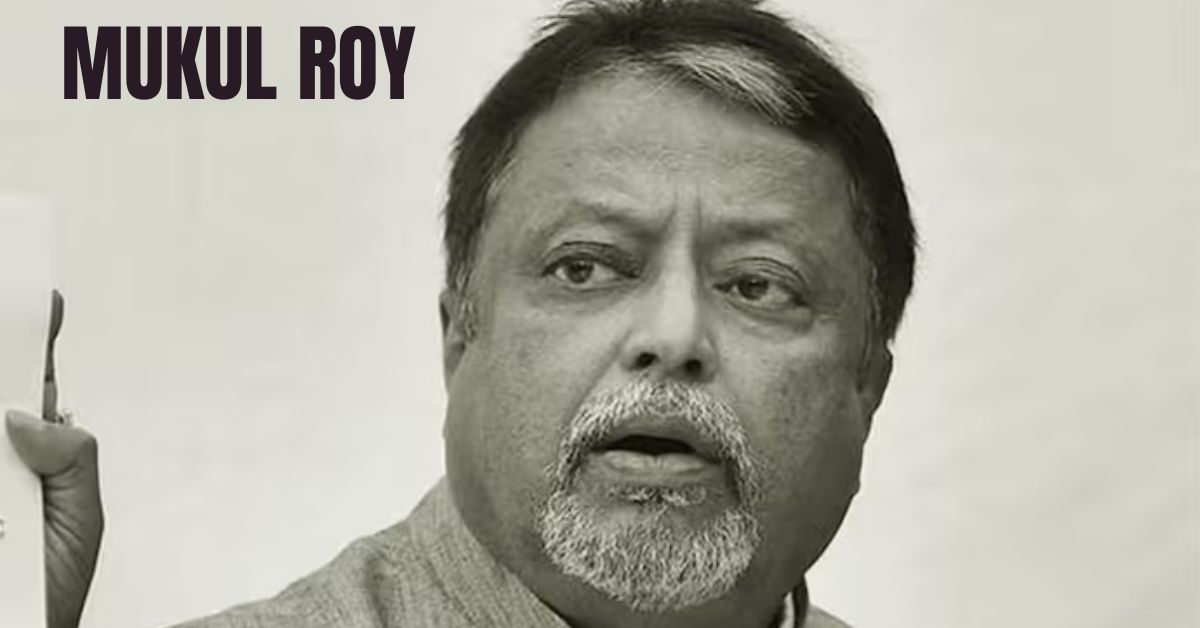
Mukul Roy, former Union Railway Minister and co‑founder of the Trinamool Congress (TMC), died in Kolkata on 22 February 2026 at the age of 71 after suffering a cardiac arrest. He had been battling multiple health issues for the last few years and passed away around 1:30 am at a private hospital in Salt Lake, Kolkata, as confirmed by his son Subhranshu Roy.
Who Was Mukul Roy?
Mukul Roy was a veteran politician from West Bengal and one of the earliest and closest associates of Mamata Banerjee in the Trinamool Congress. He played a key organisational role in building TMC as a challenger to the Left Front and later served in important positions in the central government during UPA‑II.
- Founding member and key strategist of the All India Trinamool Congress (AITC).
- Known in political circles and media as the “Chanakya of Bengal politics” for his back‑room strategies.
- Served as Minister of State for Shipping and later as Union Railway Minister in 2012.
Early Life and Entry into Politics
Publicly available records show that Mukul Roy was born in January 1955 in West Bengal. After early involvement in student and youth politics, he eventually joined Mamata Banerjee in her efforts to build an alternative to the Congress and Left in the state.
- He became part of the core group when Trinamool Congress was formed in 1998 as a breakaway from the Indian National Congress.
- On the ground, he earned a reputation as an organiser, election manager and back‑room strategist rather than a mass orator.
Although he contested the 2001 West Bengal Assembly election from Jagatdal, he lost that race, but remained important in the party structure.
Rise in TMC and Role in Delhi
Rajya Sabha and TMC Leadership
Mukul Roy entered Parliament through the Rajya Sabha in 2006 as a TMC candidate. He was re‑elected in 2012 and became one of the party’s main voices in the Upper House.
- Elected to Rajya Sabha in April 2006.
- Served as TMC leader in Rajya Sabha from May 2009 to March 2012.
He became Mamata Banerjee’s key representative in Delhi, handling alliances, coordination with the Congress‑led UPA government and internal negotiations.
Minister of State for Shipping and Railways
During the second UPA government, Roy was inducted into the Union Council of Ministers.
- Minister of State for Shipping (2009–2011), handling a supporting role in the maritime and port sector.
- Later made Minister of State in the Ministry of Railways after Mamata Banerjee left the Railways portfolio to become Chief Minister of West Bengal in 2011.
In Railways, he was considered Mamata’s trusted lieutenant, representing TMC’s interests in the central government.
Mukul Roy as Union Railway Minister
Mukul Roy briefly served as the 32nd Union Railway Minister of India in 2012.
- He became full Railway Minister in March 2012, after Dinesh Trivedi resigned over a controversial railway fare hike.
- Immediately after taking charge, Roy rolled back the passenger fare increase announced in the budget presented by Trivedi, aligning with Mamata Banerjee’s stand against the hike.
His tenure was politically sensitive and short‑lived:
- In July 2011, when he was Minister of State for Railways, he was removed from that role after reportedly not following the Prime Minister’s directive to visit a train accident site in Assam.
- In September 2012, his term as Railway Minister ended when TMC withdrew support from the UPA‑II government over policy issues.
Even though he was not Railway Minister for long, he remains part of the list of leaders from Bengal who held the powerful portfolio.
Political Journey: TMC to BJP and Back
Mukul Roy’s political career later saw multiple party shifts.
Core TMC Strategist
Within TMC, he was considered one of the architects of the party’s 2011 Assembly election victory in West Bengal, which ended more than three decades of Left rule. He was often described as Mamata Banerjee’s No. 2 in the party.
Joining the BJP
In September 2017, Roy resigned from TMC and the Rajya Sabha.
- He formally joined the Bharatiya Janata Party (BJP) on 3 November 2017.
- In the 2021 West Bengal Assembly elections, he contested and won from Krishnanagar North as a BJP candidate, becoming a BJP MLA.
His move to BJP was seen as a major defection at the time, given his organisational knowledge and inside understanding of TMC.
Return to TMC
After the 2021 Assembly polls, Roy returned to TMC in June 2021. He was welcomed back by Mamata Banerjee and described as a “family member” returning to the party fold.
However, the switch created legal complications. On 13 November 2025, the Calcutta High Court terminated his MLA post on grounds of tergiversation (party switching) under anti‑defection provisions.
This meant that by the time of his death in February 2026, he was no longer an MLA but still recognised as a senior TMC leader and founding member.
Health Issues and Final Days
Reports from his family and hospital sources indicate that Mukul Roy had been suffering from multiple health problems for some time.
- His son, Subhranshu Roy, stated that he had multiple ailments, including Parkinson’s disease and kidney problems, and had undergone three surgeries.
- He had been admitted to a Kolkata hospital for over two years and was reportedly in a coma for a period before his death.
On the night of 22 February 2026, he suffered a massive cardiac arrest at Apollo Hospital in Salt Lake, Kolkata. Despite efforts by doctors, he could not be revived and was declared dead at around 1:30 am.
Leaders across parties, including from BJP and TMC, recalled that he had been too unwell to take active part in politics in the last two to three years of his life.
Reactions to His Death
Political leaders, parties and media houses paid tribute to Mukul Roy as news of his passing spread.
- Reports describe him as an “experienced politician”, “veteran strategist” and “Chanakya of Bengal politics” who played a big role in shaping TMC’s early successes.
- Obituaries highlight his role in toppling decades of Left rule and his journey from TMC to BJP and back.
Even leaders from parties he later opposed acknowledged his organisational skills and long experience in state and national politics.
Key Roles Held by Mukul Roy
Important Positions
| Role | Period |
|---|---|
| Founding Member, TMC | From 1998 |
| Rajya Sabha MP (TMC) | 2006–2012 (re‑elected 2012) |
| TMC Leader in Rajya Sabha | 2009–2012 |
| Minister of State, Shipping | 2009–2011 |
| Minister of State, Railways | 2011 |
| Union Railway Minister (32nd) | March–September 2012 |
| BJP Leader, MLA – Krishnanagar North | 2021–2021 (returned to TMC) |
| TMC Leader (after rejoining) | 2021–2025 |
His Image as “Chanakya of Bengal Politics”
Mukul Roy was often called the “Chanakya of Bengal politics” because of his behind‑the‑scenes style and ability to manage complex political equations.
- He focused more on strategy, candidate selection, and poll management than public speeches.
- He was a key planner for TMC’s 2011 campaign, building alliances and handling logistics required to defeat the Left Front.
Later, when he switched to the BJP, he was expected to help the party expand its footprint in West Bengal using that same knowledge, although his health and changing political winds limited that role.
Controversies and Turning Points
Like many senior politicians, Mukul Roy’s career was not free of controversy.
- His removal as Minister of State for Railways after he did not visit a train accident site in Assam when asked by the Prime Minister drew national attention and criticism.
- His shift from TMC to BJP and then back to TMC raised questions about loyalty and political opportunism among critics.
- The Calcutta High Court’s 2025 decision terminating his MLA seat under anti‑defection rules was a rare legal blow to a leader of his stature.
However, his supporters argue that his moves were strategic and that he remained committed to West Bengal’s interests.
Personal Life
Details from public profiles show that Mukul Roy was married and had at least one son, Subhranshu Roy, who is also active in politics.
- Subhranshu Roy has been a TMC leader and has often spoken publicly about his father’s health and political phases.
- At the time of Mukul Roy’s death, it was his son who confirmed the news to the media and shared details about his prolonged illness.
Beyond politics, reports and obituaries describe Mukul Roy as a keen follower of cricket, especially Test cricket.
Legacy and How He Will Be Remembered
Mukul Roy leaves behind a complex but significant legacy in Indian and West Bengal politics.
Elements of His Legacy
| Area | Legacy |
|---|---|
| TMC Formation | Co‑founder, helped build TMC as Left alternative |
| 2011 Bengal Win | Key organiser in ending Left Front’s 34‑year rule |
| National Role | Part of UPA‑II government, Railway Minister in 2012 |
| Strategy | Known for micro‑level poll planning and alliances |
| Party Hops | High‑profile moves between TMC and BJP |
| Health & End | Spent last years largely away from active politics |
For many in West Bengal, he will remain associated with the transition years when the state moved away from Left rule and TMC rose to power, and with the later phase of intense BJP–TMC rivalry where his defections became national news.
Comparison with Other Bengal Political Strategists
To place his role in context, some reports compare Mukul Roy with other back‑room planners in Bengal politics.
Mukul Roy vs Other Bengal Political Brains (Illustrative)
| Leader | Party | Known For |
|---|---|---|
| Mukul Roy | TMC → BJP → TMC | Strategy, candidate selection, alliances |
| Prashant Kishor | Consultant | Professional poll strategist |
| Subrata Bakshi | TMC | Organisational management in TMC |
While poll consultants like Prashant Kishor worked as external professionals, Mukul Roy was an in‑house political strategist deeply rooted in party structures and local realities.
In Short
Mukul Roy’s death at 71 closes the chapter on one of the most influential, and sometimes controversial, back‑room players in Bengal politics. From helping Mamata Banerjee build TMC and win power in 2011, to briefly steering the Indian Railways, to switching sides and then returning to his old party, his career reflects both the possibilities and the uncertainties of coalition‑era politics in India.
You may also like : Domestic Tour Pacakages, International Tour Pacakages, Kerela Tour, Andman Tour, Delhi Shimla Tour, Seasonal Tour, Ooty Mysore Coorg Tour 5 Nights / 6 Days, Travel Agent in Agra, Best Travel Agent in Agra, Tour Planner in Agra