
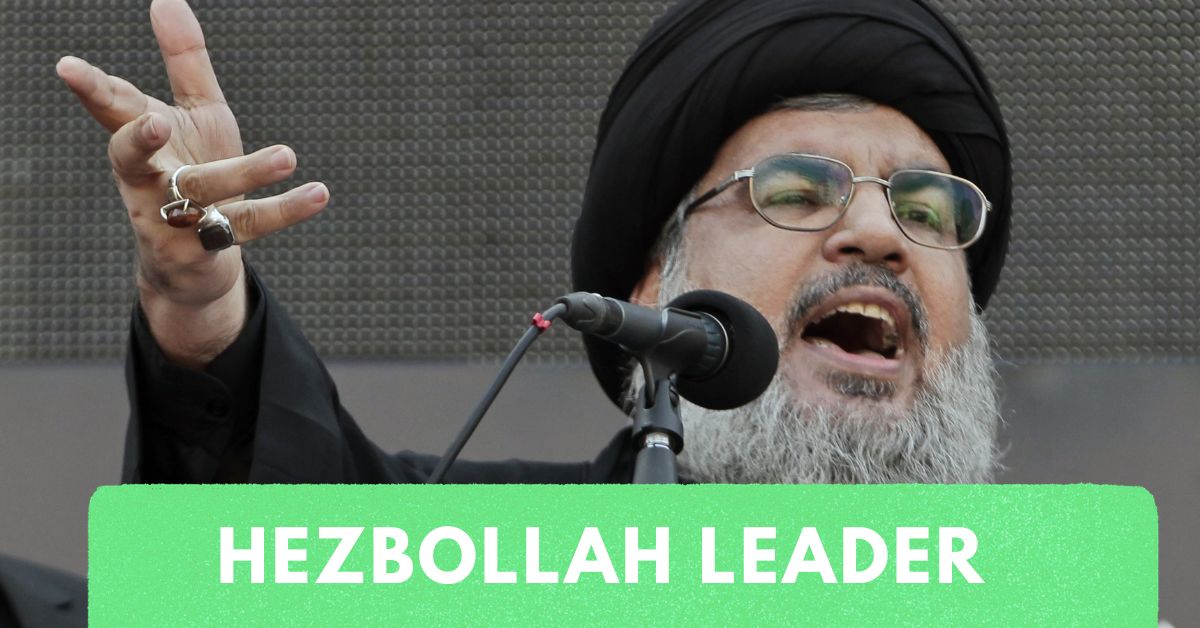
Hezbollah in 2026 is led by Naim Qassem, who took over after the killing of long‑time chief Hassan Nasrallah, while Hashem Safieddine was a key power‑broker and designated successor who was killed in 2024. Hezbollah itself is a Lebanese Shia Islamist movement and armed group, founded in the early 1980s with strong backing from Iran.
Who Is Hezbollah?
Hezbollah is a Shia Islamist political, social, and militant organisation based in Lebanon. It emerged during the Lebanese Civil War after Israel’s 1982 invasion of Lebanon, as a coalition of Shia clerics and militants inspired by Iran’s 1979 Islamic Revolution.
Hezbollah combines several roles:
- A political party participating in Lebanese elections and parliament.
- A powerful non‑state armed group with its own military wing, often called the “Islamic Resistance”.
- A provider of social services, including schools, hospitals, and welfare networks, particularly in Shia‑majority areas.
Ideologically, Hezbollah adheres to a Shia Islamist line that follows the concept of Wilayat al‑Faqih (Guardianship of the Jurist) associated with Iran’s Ayatollah Khomeini. It is strongly anti‑Israel and part of the regional “Axis of Resistance” alongside Iran and allied groups in Iraq, Syria, and Yemen.
Hezbollah: Country, Base and Reach
Hezbollah is headquartered in Lebanon and is closely associated with that country’s Shia community, especially in:
- Southern Lebanon
- The Bekaa Valley
- Southern suburbs of Beirut (Dahiyeh)
Multiple states and international bodies, including the United States and several European and Arab governments, designate Hezbollah or its military wing as a terrorist organisation, though some countries distinguish between its political and armed branches. Despite that, Hezbollah remains a major player inside Lebanon’s political system, holding seats in parliament and cabinet alliances.
Regionally, Hezbollah is active beyond Lebanon’s borders. It has sent fighters to support the Syrian government, maintains close operational ties with Iran’s Islamic Revolutionary Guard Corps (IRGC), and is accused of operations or networks in parts of the Middle East, Africa, and Latin America.
Origins and Evolution of Hezbollah
Hezbollah’s roots lie in the chaos of the Lebanese Civil War and the 1982 Israeli invasion. Shia clerics and militants, many organised through the Association of Muslim ‘Ulama in Lebanon and influenced by Iran, merged to create a new resistance movement.
Key milestones in its evolution include:
- 1982–1985: Formation with Iranian IRGC support, focus on resisting Israeli forces and Western presence.
- Late 1980s–1990s: Consolidation in Lebanon’s Shia areas, suicide attacks and guerrilla warfare against Israeli and Western targets, gradual shift into formal politics.
- 2000: Israel’s withdrawal from southern Lebanon, which Hezbollah claims as a victory for its resistance strategy.
- 2006: War between Hezbollah and Israel, after Hezbollah captured Israeli soldiers; the conflict devastated parts of Lebanon but enhanced Hezbollah’s image among supporters as a resilient force.
Over time, Hezbollah expanded from a clandestine militant group to a hybrid actor—simultaneously a major militia, political party, and welfare provider—while maintaining strong links with Iran’s leadership.
Basic Facts about Hezbollah
| Aspect | Details |
|---|---|
| Type | Shia Islamist political and militant organisation |
| Country/Base | Lebanon (primarily south, Bekaa, and Beirut’s southern suburbs) |
| Founded | Early 1980s, after 1982 Israeli invasion of Lebanon |
| Main foreign backer | Iran, via Islamic Revolutionary Guard Corps (IRGC) |
| Key conflict focus | Armed resistance against Israel and opposition to Western influence |
Leadership Structure of Hezbollah
Hezbollah’s top position is the Secretary‑General, elected by the group’s Shura Council (consultative council). This leader is supported by:
- A Political Council handling party and parliamentary affairs.
- An Executive Council overseeing social services, finances, and media.
- A Jihad (military) Council managing armed operations.
Historically, Hezbollah has had a small number of secretaries‑general:
- Subhi al‑Tufayli (first secretary‑general, late 1980s).
- Abbas al‑Musawi (killed by Israel in 1992).
- Hassan Nasrallah (1992–2024, killed in an Israeli airstrike).
- Naim Qassem (from October 2024).
The movement’s internal decision‑making remains highly opaque, but the secretary‑general is the public face, while bodies like the Shura Council and Executive Council exercise collective influence.
Secretaries‑General of Hezbollah
Hassan Nasrallah: Long‑Time Leader (1992–2024)
Hassan Nasrallah became Hezbollah’s secretary‑general in 1992 after Abbas al‑Musawi’s assassination. Under his leadership, Hezbollah evolved into one of the most powerful non‑state armed groups in the region and a central actor in Lebanese politics.
Nasrallah’s tenure was marked by:
- Continued armed confrontation with Israel, including the 2006 war.
- Expansion of social services and media operations (notably Al‑Manar TV).
- Deepened strategic alliance with Iran and involvement in the Syrian civil war on the side of Bashar al‑Assad.
In 2024, Nasrallah was killed in an Israeli airstrike in Beirut amid escalated conflict along the Lebanon–Israel border. His death triggered a major internal and regional shock and opened the succession question.
Hashem Safieddine: Power Broker and Designated Successor
Hashem Safieddine (also spelled Safi al‑Din or Safieddine) was long regarded as one of Hezbollah’s most influential figures and a relative of Hassan Nasrallah. He headed Hezbollah’s Executive Council, which oversees finances, social institutions, media, and overall organisational direction.
Safieddine was widely viewed by analysts and some media as a likely successor to Nasrallah, given his seniority, family ties, and reputation as a strategist. He was born in southern Lebanon in 1964 and has been associated with Hezbollah since its formative years, reportedly spending time in Iran’s religious city of Qom and maintaining close links with Iranian leadership.
In October 2024, Israel announced that Safieddine had been killed in an airstrike in the Dahiyeh area of Beirut, the first acknowledged killing of such a senior political and organisational figure after Nasrallah’s death. Reports described him as the head of Hezbollah’s intelligence or executive apparatus and a central figure in its strategy and finances.
Hashem Safieddine at a Glance
| Attribute | Details |
|---|---|
| Full name | Hashem Safieddine |
| Birth | 1964, southern Lebanon |
| Key role | Head of Hezbollah’s Executive Council, senior strategist |
| Relation to Nasrallah | Relative (often described as cousin or close family) |
| Reputation | Seen as possible successor to Nasrallah |
| Death | Killed in Israeli strike in Beirut (October 2024) |
Naim Qassem: Hezbollah’s Current Leader (2026)
After Nasrallah’s assassination, the Shura Council selected Naim Qassem, longtime deputy secretary‑general, as Hezbollah’s new secretary‑general on 29 October 2024.
Qassem has been part of Hezbollah’s top leadership since the early 1990s. He became deputy to Nasrallah after Abbas al‑Musawi’s death and has been a key ideologue and spokesperson, authoring writings on Hezbollah’s ideology and frequently representing the group in media.
Under Qassem’s leadership:
- Hezbollah has continued to frame itself as Lebanon’s front‑line defence against Israel.
- The group faces intense military pressure and repeated targeted strikes against its commanders.
- Regional tensions remain high, tying Hezbollah’s actions closely to Iran–Israel and Iran–US dynamics.
Israeli officials have described Qassem’s appointment as “temporary” and have signalled that he is also a target, underscoring the precarious nature of Hezbollah’s leadership environment.
Naim Qassem’s Profile
| Attribute | Details |
|---|---|
| Position | Secretary‑General of Hezbollah (from Oct 29, 2024) |
| Previous role | Deputy Secretary‑General since 1991 |
| Background | Senior cleric and long‑time Hezbollah insider |
| Public image | Ideologue and spokesperson, close to Nasrallah |
| Context of rise | Elevated after Nasrallah’s assassination in 2024 |
Hezbollah’s Internal Power Centres Beyond the Leader
While the secretary‑general is the public face, Hezbollah’s power is distributed across several internal structures:
- Shura Council: The highest decision‑making body, which elects the secretary‑general and sets strategic direction.
- Executive Council: Manages finances, social networks, media and institutions; previously headed by Hashem Safieddine.
- Jihad Council: Oversees military operations, planning, and coordination with allied forces.
- Political Council: Deals with Lebanese politics, alliances, and parliamentary strategies.
This structure allows Hezbollah to continue operating even after targeted killings, as responsibilities and decision‑making are spread across multiple councils and commanders.
Where Does Hezbollah Operate and Hold Influence?
Hezbollah’s core base is Lebanon, but its activities and influence are regional.
Inside Lebanon, it:
- Maintains a strong support base among Shia communities.
- Exercises de facto control over parts of southern Lebanon and Beirut’s southern suburbs.
- Influences government formation and policy through alliances in parliament.
Outside Lebanon, Hezbollah:
- Deploys fighters and advisers in Syria in support of the Assad government.
- Coordinates with Iran and other aligned militias in the region.
- Is accused by multiple governments of establishing networks or cells abroad for fundraising, logistics, or covert operations.
Frequently Asked Basics (2026)
- Who is the current Hezbollah leader?
As of 2026, Naim Qassem is Hezbollah’s secretary‑general, having succeeded Hassan Nasrallah after his assassination in 2024. - Who was Hashem Safieddine?
Safieddine was a senior Hezbollah figure, head of the Executive Council, relative of Nasrallah, and widely seen as a key contender to lead the group; he was killed in an Israeli strike in October 2024. - Which country is Hezbollah from?
Hezbollah is a Lebanese organisation, deeply rooted in Lebanon’s Shia community, though it has strong backing from Iran and operates regionally. - Is Hezbollah only a militant group?
No, it is simultaneously a political party, armed movement, and provider of social services, though many countries focus on and sanction its military activities.
This provides a structured 2026 overview of Hezbollah’s leadership—particularly Naim Qassem and Hashem Safieddine—and the movement’s origins, country base, and organisational profile.
You may also like : Domestic Tour Pacakages, International Tour Pacakages, Kerela Tour, Andman Tour, Delhi Shimla Tour, Seasonal Tour, Ooty Mysore Coorg Tour 5 Nights / 6 Days, Travel Agent in Agra, Best Travel Agent in Agra, Tour Planner in Agra