
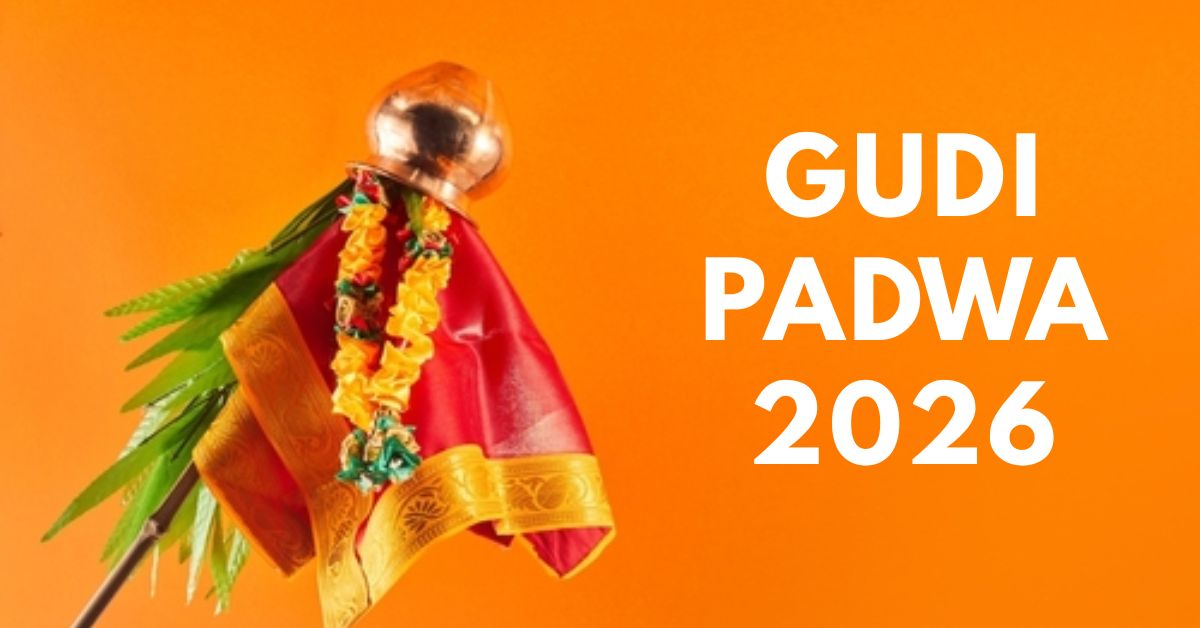
Gudi Padwa 2026 marks the Marathi Hindu New Year and the start of the spring season, celebrated with the iconic gudi flag, auspicious puja and festive food across Maharashtra and other parts of India. In 2026, it falls on Thursday, 19 March, on the first day of the Chaitra month (Chaitra Shukla Pratipada) of the Hindu lunisolar calendar.
Gudi Padwa 2026 Date and Muhurat
Most updated 2026 Panchang and festival guides agree on a 19 March 2026 observance for Gudi Padwa in India, particularly for New Delhi and much of Maharashtra.
- Date: Thursday, 19 March 2026.
- Tithi: Chaitra Shukla Pratipada (New Year day in many Hindu traditions).
- Tithi timing (approx.):
For New Delhi, one detailed Panchang site suggests a Shubh Muhurat roughly from around 06:26 am to 12:00 pm for core Gudi Padwa puja.
Gudi Padwa 2026: Key Timing Details
The exact auspicious window can vary by city based on sunrise; devotees usually check local Panchang or temple announcements for precise muhurat.
What Is Gudi Padwa and Where Is It Celebrated?
Gudi Padwa is primarily observed in Maharashtra and Goa as the Marathi and Konkani New Year, but related observances occur across India on the same day under different regional names.
- In Maharashtra, it is a major household and community festival, with gudi flags hoisted outside homes as symbols of victory and prosperity.
- In Karnataka and Andhra–Telangana, the same day is celebrated as Ugadi; in Kashmir as Navreh; in some Sindhi communities as Cheti Chand (usually close by date).
- It marks the start of the spring season, the harvest of rabi crops and a fresh agricultural cycle in many rural areas.
The Maharashtra tourism department describes Gudi Padwa as an occasion when homes are cleaned and decorated, people wear new clothes, and cities like Mumbai, Pune and villages across the Konkan become vibrant with processions, dhol‑tasha, and community events.
Historical and Mythological Background
Gudi Padwa has layers of mythology, dynastic history and regional legends woven into its origin.
1. Creation of Time and the Universe
One widely cited belief links Gudi Padwa to the day Lord Brahma created time and the universe, making it the symbolic “first day” of creation. In this view, Chaitra Shukla Pratipada is the cosmic beginning, which is why it is chosen as New Year in many Hindu traditions.
2. Lord Rama’s Return to Ayodhya
Another popular legend holds that Gudi Padwa commemorates Lord Rama’s return to Ayodhya after defeating Ravana and completing 14 years of exile. The gudi, with its fluttering cloth and upturned pot, is then seen as a victory flag, similar to banners raised to welcome a victorious king.
3. Shalivahan Era and Historical Victories
Several historical interpretations connect Gudi Padwa with the Shalivahan calendar and early medieval Maharashtrian dynasties:
- Some writers say it marks the victory of King Shalivahan over the Huns, symbolising the start of the Shalivahan Shaka era.
- Others link it to the Yadava dynasty and its agricultural calendar as a harvest festival.
- Another strong regional belief is that Chhatrapati Shivaji Maharaj and the Marathas adopted or popularised the gudi as a symbol of victory and sovereignty, raising it after successful campaigns.
Scholars note that these legends co‑exist rather than mutually exclude each other; over time, mythic stories and historical events blended into a composite tradition for Maharashtrian New Year.
Key Legends Associated with Gudi Padwa
Religious and Spiritual Significance
Beyond history and legend, Gudi Padwa carries strong spiritual and seasonal symbolism:
- It marks the start of the Chaitra month and the waxing lunar phase (Shukla Paksha), associated with growth, clarity and auspicious beginnings.
- It is considered an ideal day for starting new ventures, house‑warming ceremonies, business openings and other “firsts” because the energy of the day is thought to be pure and prosperous.
- Traditional texts and popular guides link Gudi Padwa to the victory of good over evil, symbolic of inner renewal, clearing negativity and recommitting to dharma.
Many spiritual write‑ups describe the act of raising the gudi as “inviting divine grace” into the home and aligning oneself with victory, abundance and protection for the year ahead.
How Gudi Padwa Is Celebrated: Rituals and Customs
Though specific practices vary by region and family, certain rituals are common across Maharashtrian households.
Morning Preparations
Most guides recommend starting Gudi Padwa rituals before or around sunrise:
- Abhyanga snan (oil bath): Devotees wake up early and take a ritual oil bath to purify the body and mind.
- House cleaning and rangoli: Homes are cleaned thoroughly; vibrant rangoli patterns are drawn at the entrance.
- New clothes: People wear traditional new outfits—sarees, dhotis, kurta‑pyjamas—and adorn themselves with jewellery and flowers.
Erecting the Gudi
The gudi is the central symbol of the festival. A typical gudi comprises:
- A long bamboo pole.
- A bright silk or brocade cloth, often yellow, saffron or green, tied near the top.
- A string of neem leaves, mango leaves and flowers (especially marigolds).
- An upturned copper, silver or brass pot placed on top of the pole.
- Sometimes, a sugar garland or grains to symbolise sweetness and prosperity.
The gudi is placed outside a window, balcony or at a visible spot in front of the house, usually on the right side of the main entrance. It is worshipped as a symbol of victory, luck and the divine standard of Lord Rama or Shivaji, depending on the family belief.
Puja and Offerings
Common Gudi Padwa puja steps include:
- Performing Ganesh and Lakshmi puja or general household deities’ worship.
- Lighting a diya (lamp) and incense near the gudi and home shrine.
- Offering neem leaves and jaggery mixture, believed to balance life’s sweet and bitter experiences.
- Reciting mantras or prayers from the Ramayana or other scriptures.
- Distribution of prasad and festive meals among family and neighbours.
Festive Foods
Popular Gudi Padwa dishes typically include:
- Puran poli (sweet flatbread stuffed with lentil‑jaggery mixture).
- Shrikhand, basundi, and other milk‑based sweets.
- Seasonal preparations using fresh vegetables and grains, aligned with the new harvest.
Core Rituals of Gudi Padwa 2026
| Time of Day | Ritual / Custom | Significance |
|---|---|---|
| Before sunrise | Oil bath (abhyanga snan) | Physical and spiritual purification |
| Early morning | House cleaning, rangoli, toran decoration | Inviting positive energy into the home |
| Morning | Erecting the gudi outside the house | Symbol of victory, New Year and divine grace |
| Morning–noon | Puja to Gudi, Ganesh–Lakshmi, offering neem–jaggery | Seeking blessings, balance of sweet & bitter |
| Daytime | Family feasts, visits, cultural events | Community bonding and celebration |
Regional Names and Related New Year Festivals on the Same Day
Gudi Padwa 2026 coincides with other regional New Year observances:
- Ugadi/Yugadi – Andhra Pradesh, Telangana and Karnataka (same Chaitra Shukla Pratipada).
- Navreh – Kashmiri Pandits’ New Year.
- Cheti Chand – Sindhi New Year, sometimes very close in date.
- Chaitra Navratri start – In North India, the same day begins the nine‑day Chaitra Navratri.
This underscores the fact that the first day of the Chaitra month is widely seen across India as an auspicious new cycle, even though names and rituals vary.
Parallel New Year Festivals Around Gudi Padwa
Gudi Padwa 2026: Travel and Cultural Highlights in India
With increasing interest in cultural tourism, several cities and regions in Maharashtra are promoted as attractive places to experience Gudi Padwa 2026:
- Mumbai: Street processions, dhol‑tasha troupes, women’s bike rallies and heritage walks in Dadar, Girgaon and other traditional pockets.
- Pune: Large public Gudi Padwa processions, cultural performances and displays of traditional Maharashtrian attire and folk arts.
- Rural Konkan: Villages in Raigad, Ratnagiri, Sindhudurg showcase more traditional agrarian celebrations, temple rituals and community feasts.
Travel blogs for 2026 highlight these places as offering energetic processions, the sound of dhol and tasha, and visually stunning arrangements of gudis along old lanes and chowks.
Why Gudi Padwa 2026 Matters Today
In 2026, Gudi Padwa continues to be more than just a date on the calendar:
- For many Maharashtrian families, it is the true New Year, more emotionally resonant than 1 January, because it ties into their language, culture and spiritual stories.
- As urban India grows more cosmopolitan, Gudi Padwa also becomes a day when communities reaffirm their regional identity—through traditional dress, language, music and food—amid a globalised lifestyle.
- Environmentally conscious devotees are increasingly choosing eco‑friendly decorations, natural rangoli colours and locally sourced food for the festival, blending tradition with modern values.
Gudi Padwa 2026, observed on Thursday, 19 March, thus stands at the intersection of history, mythology, seasonal change, cultural pride and spiritual renewal, making it one of the most meaningful festival dates in India’s vibrant calendar.
You may also like : Domestic Tour Pacakages, International Tour Pacakages, Kerela Tour, Andman Tour, Delhi Shimla Tour, Seasonal Tour, Ooty Mysore Coorg Tour 5 Nights / 6 Days, Travel Agent in Agra, Best Travel Agent in Agra, Tour Planner in Agra