
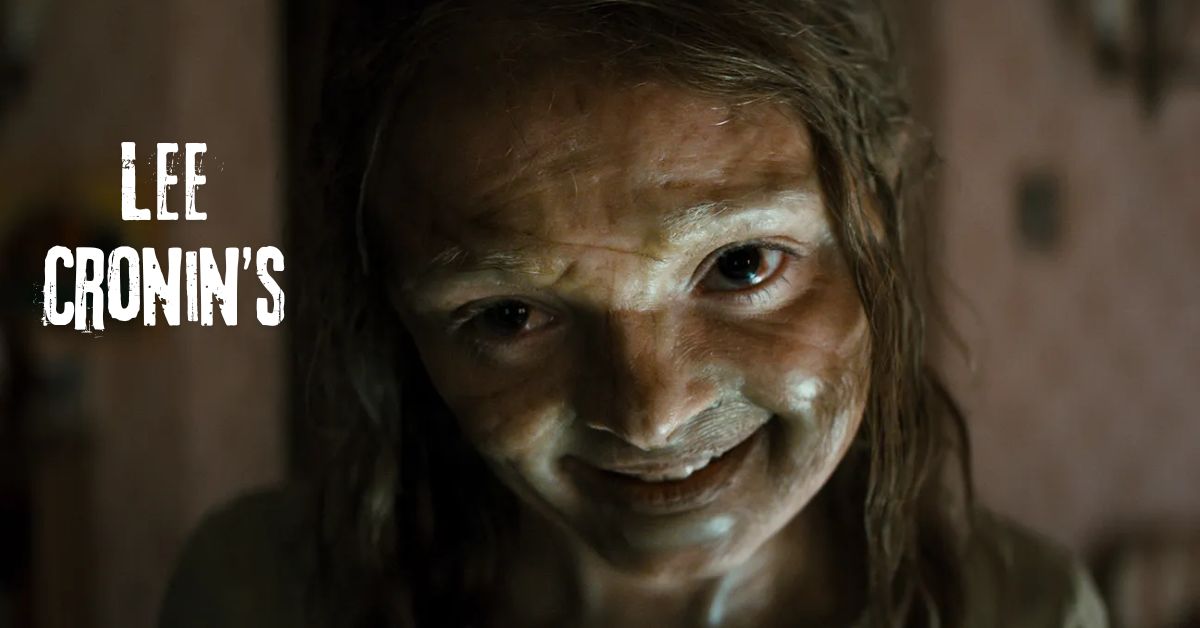
Lee Cronin’s The Mummy (also billed simply as The Mummy), released in April 2026, is a fresh, supernatural‑horror reimagining of the classic Universal monster franchise. Written and directed by Lee Cronin (known for Evil Dead Rise and The Hole in the Ground), this 2026 version trades pharaohs and bandages for a psychologically darker, family‑centred horror story about a missing daughter, an inexplicable return, and a slow, gruesome possession that tests the limits of parental belief and sanity.
Director, Release Date & Core Concept (2026 Snapshot)
Before diving into cast and reviews, it helps to anchor the film with basic facts.
- Title: Lee Cronin’s The Mummy (often listed as just The Mummy).
- Director: Lee Cronin – Irish writer–director who rose to prominence with The Hole in the Ground and the 2023 hit Evil Dead Rise.
- Release date: 17 April 2026 in theatres (North America and international markets).
- Genre: Supernatural / family‑centred horror, with heavy body‑horror and psychological‑drama elements.
- Production: Produced by James Wan (Atomic Monster) and Jason Blum (Blumhouse Productions), continuing the trend of Blumhouse‑style horror infused with Universal‑franchise IP.
The core idea is a modern twist on the Mummy legend rather than a direct remake of the Brendan Fraser action‑adventure series. The story is built around a missing child, a shocking return, and a slow‑burn “possession” narrative that some critics call more like an exorcism saga than a traditional mummy picture.
Main Cast and Key Characters
The 2026 film depends heavily on its family‑unit performances, with a strong ensemble anchored by Jack Reynor, Laia Costa, and May Calamawy, supported by Verónica Falcón, Natalie Grace, and others.
Lead actors and roles
- Jack Reynor as Charlie Cannon – a journalist and father thrust into a nightmare when his daughter returns eight years after vanishing.
- Laia Costa as Larissa Cannon – Charlie’s wife, struggling with guilt, trauma, and a gradually destabilising reality as their daughter’s behaviour grows more extreme.
- May Calamawy – plays a pivotal role tied to the supernatural investigation; some sources describe her as a character with links to ancient‑faith and possession‑concealment.
- Natalie Grace as Katie Cannon – the middle child who disappeared eight years earlier and is now back, but changed in terrifying ways.
- Verónica Falcón as Carmen – Larissa’s mother, who brings additional generational tension and cultural‑spiritual context into the story.
Other notable cast members
- May Elghety, Shylo Molina, Billie Roy, and Hayat Kamille flesh out the family and local‑support roles.
- Lily Sullivan (star of Evil Dead Rise) appears in a small cameo as a teacher, a nod to Cronin’s previous work.
Main Cast of Lee Cronin’s The Mummy (2026)
| Actor / Actress | Character / Role |
|---|---|
| Jack Reynor | Charlie Cannon – journalist, father |
| Laia Costa | Larissa Cannon – Charlie’s wife, mother |
| May Calamawy | Key occult / spiritual figure; intermediary with the “Mummy” entity |
| Natalie Grace | Katie Cannon – missing daughter, now returned and possessed |
| Verónica Falcón | Carmen – Larissa’s mother, adds generational conflict and belief layers |
This table is ideal for readers who want to quickly match faces and character names before or after watching the film.
Plot & How It Relates to the Original The Mummy Franchise
Rather than a traditional mummy‑revival tale, Lee Cronin’s version is best understood as a spiritual / thematic re‑imagining of the franchise.
Core story outline
- Backstory: Eight years earlier, the young daughter Katie vanishes into the desert without a trace, shattering the Cannon family.
- Shocking return: After years of grief and separation, Katie suddenly walks back home, physically present but emotionally and physically altered.
- The horror twist: What should be a joyful reunion quickly turns into a living nightmare as her behaviour grows more disturbing, violent, and inexplicable.
- Possession, not pharaoh: The film frames the “Mummy” not as a cursed priest, but as an ancient demon possessing a young girl, who now torments her family with levitations, hallucinations, and grotesque physical manifestations.
How it connects to the franchise
The Mummy name and iconography are kept as a heritage hook, but the treatment is closer to a demon‑possession / exorcism narrative than a classic monster‑movie.
- Franchise lineage:
- Tone shift:
- Unlike the Brendan Fraser adventures, this 2026 version is much darker, slower, and more psychologically oppressive, with critics comparing it to “The Exorcist meets The Descent in a family‑drama wrapper.”
The Mummy Through the Years – 2026 Context
This comparison helps readers understand why Cronin’s 2026 film feels like its own thing, even though it wears the Mummy banner.
Critical Reception & Early Reviews (2026)
By mid‑April 2026, several major outlets and horror‑specialist sites have published reviews of Lee Cronin’s The Mummy, yielding a mixed‑but‑ultimately‑positive critical buzz.
Professional‑review summary
- Variety describes the film as a “long, lavishly gory horror ride [that] is loud enough to wake the undead,” praising its visual audacity and Cronin’s craft but noting that it can feel over‑extended and heavy‑handed in parts.
- Deadline calls it “fiendish but not particularly frightful,” highlighting Cronin’s stylistic flair and atmospheric buildup while suggesting the payoff is more grotesque than genuinely scary.
- The Film Verdict brands it as “more exorcism saga than mummy picture,” appreciating the family‑drama core and strong performances, but criticizing the length and excessive gross‑out moments.
- AP critic Mark Kennedy labels it a “messy, overlong” attempt to revive the classic monster, arguing that the concept is promising but execution uneven.
Many reviewers agree that the strength of the film lies in:
- Lee Cronin’s direction and tone, which blend slow‑burn unease with sudden bursts of body‑horror.
- The family‑unit performances, especially Jack Reynor and Laia Costa as parents pushed to the edge.
- The creative twist on the “Mummy” idea, turning it into a teen‑girl‑possession narrative.
However, common criticisms include:
- Overlong runtime and repetitive possession‑set‑pieces.
- Excessive gore, which some feel undercuts psychological horror in favour of shock.
Rotten Tomatoes, Metacritic & Audience Scores (2026)
Rotten Tomatoes and Metacritic aggregate critical‑review sentiment quickly for theatrical releases, and Lee Cronin’s The Mummy is no exception.
Rotten Tomatoes snapshot (April 2026)
- Critic score:
- 53% “Fresh” (as of early April 2026, based on roughly 70–75 reviews).
- This means just over half of critics rated it positively, with many giving solid but not glowing marks.
- Audience score (RT):
Metacritic score
- Metacritic assigns Lee Cronin’s The Mummy a score of 46 out of 100, based on about 20 critics.
- This is categorized as “mixed or average”, reinforcing the idea that the film is competently made and worth watching for horror‑fans, but not a home‑run across all cinema‑critic circles.
Key Score Aggregates (2026)
This table is useful for readers who want to know whether the film is critically “good,” “okay,” or “mixed” before investing two hours.
Why It Stands Out in 2026 Horror
Despite the mixed reviews, Lee Cronin’s The Mummy has carved a niche in the 2026 horror landscape by:
- Bridging Blumhouse horror with Universal‑franchise IP:
- Focusing on family and psychology over pure monster‑action:
- Instead of sweeping desert‑set battles, it zeroes in on grief, guilt, and belief systems breaking down under supernatural pressure.
- Testing the “Mummy” as a demon‑possession story:
- The 2026 film reframes the mummy as a seductive, grotesque force possessing a teenager, which some reviewers call fresh and disturbing, even if not perfectly balanced.
For horror‑fans, this makes Lee Cronin’s The Mummy worth seeing as both a Casey‑Cronin‑style slow‑burn and a creative re‑read of the Universal monster‑mythos.
Frequently Asked Questions (FAQs)
Q1: Who directed Lee Cronin’s The Mummy?
The film is written and directed by Lee Cronin, the Irish filmmaker behind The Hole in the Ground and Evil Dead Rise.
Q2: Is this related to the original The Mummy films?
Yes, but it is a loose reimagining rather than a direct remake. It retains the “Mummy” concept and branding but reworks the monster as an ancient‑demon‑possessing‑a‑girl rather than a resurrected pharaoh.
Q3: Who is in the cast?
The main cast includes Jack Reynor, Laia Costa, May Calamawy, Natalie Grace, and Verónica Falcón, with supporting roles from May Elghety, Shylo Molina, Billie Roy, Hayat Kamille, and a small cameo by Lily Sullivan (Evil Dead Rise).
Q4: What is the film’s Rotten Tomatoes score in 2026?
As of early April 2026, Lee Cronin’s The Mummy sits at 53% “Fresh” on Rotten Tomatoes (critics), with audiences scoring it in the mid‑60s to low‑70s.
Q5: Is the film scary or just gory?
Critics describe it as more gory and grotesque than traditionally “scary,” with strong body‑horror moments and psychological tension, but not a unanimous fright‑fest.
You may also like : Blueroads, Travel Agency in Agra
