
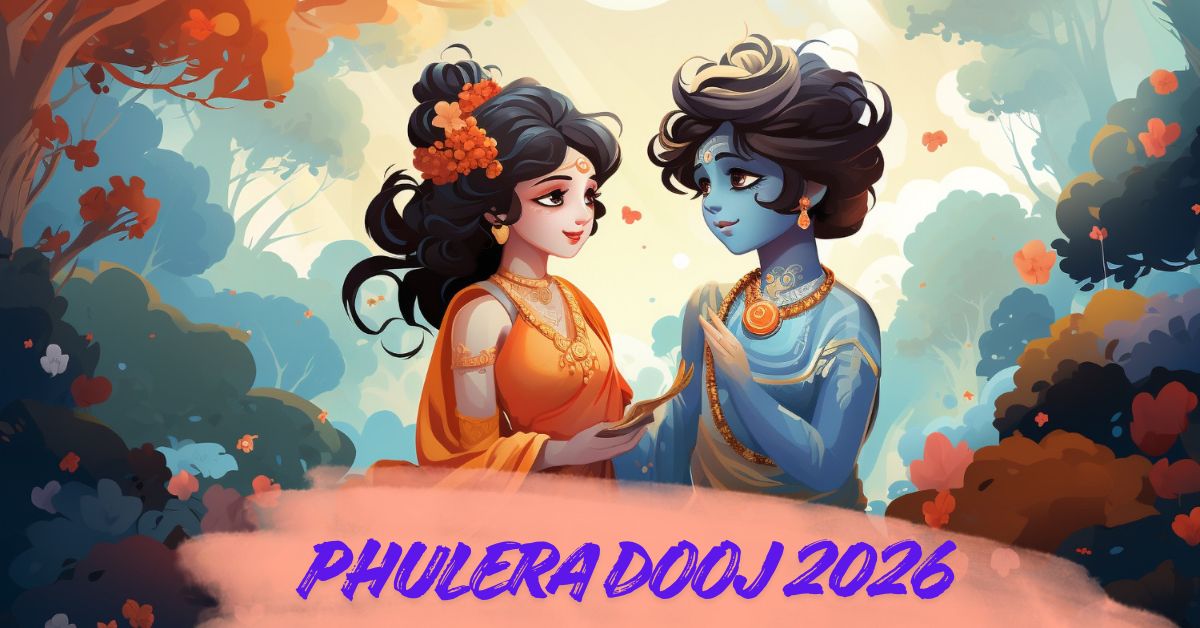
Phulera Dooj 2026 falls just before Holi and is celebrated as a joyful, flower‑filled festival dedicated to Radha–Krishna and considered one of the most auspicious days of the year for marriages and new beginnings. In 2026 it is also an Abujh Muhurat, meaning almost the entire day is treated as shubh without needing detailed horoscope calculations, so understanding its exact date, story, muhurat and simple puja vidhi is very useful for families planning weddings and pujas.
Phulera Dooj 2026 Date & Tithi Details
Phulera Dooj is observed every year on Falgun Shukla Dwitiya, the second lunar day of the bright fortnight in the month of Falgun, between Vasant Panchami and Holi. In 2026, Phulera Dooj is celebrated on Thursday, 19 February 2026.
Tithi and Panchang for 2026
Multiple panchang sources give almost identical timings for the Dwitiya tithi.
Falgun Shukla Dwitiya (India time):
- Starts: 18 February 2026, around 4:57–4:58 PM.
- Ends: 19 February 2026, around 3:58–3:59 PM.
A Drik Panchang‑based guide for 2026 gives the following reference for 19 February:
Because Dwitiya continues till the afternoon of 19 February, most Hindu calendars mark 19 February 2026 (Thursday) as the main Phulera Dooj date for puja and celebrations.
Meaning & Significance of Phulera Dooj
Festival of flowers and “mini Holi”
Phulera Dooj literally connects to phool (flowers) and is closely linked to the colourful spirit of Holi.
- It signals the arrival of spring (Vasant) and the coming of Holi, especially in Braj, Mathura, Vrindavan and Rajasthan.
- Temples, especially in Braj and Krishna‑related shrines, decorate deities heavily with flowers and often play a symbolic “phoolon ki Holi” with petals rather than colours.
Abujh (Abhuj) Muhurat – why it is so special
Phulera Dooj is widely described as an Abujh Muhurat, meaning:
- The day is considered so auspicious that you do not need a separate, narrow muhurat for important ceremonies.
- Many astrologers and dharmic sources say any time on Phulera Dooj (within the Dwitiya tithi) is good for marriages, engagements, griha pravesh and other manglik works.
Reports for 2026 specifically note that 19 February 2026 is expected to see record numbers of Hindu weddings across North India because of its rare, universally favourable Abujh Muhurat status.

Story & Legends: Radha–Krishna and Phulera Dooj
Most modern dharmic sources connect Phulera Dooj with Radha and Krishna’s divine love and playful Holi‑like celebrations in Braj.
Radha–Krishna’s “phoolon ki Holi”
- According to popular tradition, on Phulera Dooj Lord Krishna played Holi with flowers with Radha and the gopis, especially in the Braj region.
- Temples in Mathura, Vrindavan and nearby areas recreate this by showering the deities and devotees with flower petals, symbolising the start of Holi festivities.
Divine marriage at Bhandirvan
Some narratives and spiritual articles describe Phulera Dooj as commemorating the divine marriage (Vivah) of Radha and Krishna at Bhandirvan, one of the forests of Braj.
- The union of Radha–Krishna at Bhandirvan is seen as a deeply sacred event, and Phulera Dooj honours this union and divine love.
- Because of this association, the day is considered especially auspicious for human marriages and relationships, further reinforcing its Abujh Muhurat status.
Together, these legends make Phulera Dooj a day of love, harmony and colourful devotion rather than fear or inauspiciousness.
Phulera Dooj 2026: Shubh Muhurat & Abujh Time
Though the entire Dwitiya tithi is considered auspicious, many almanacs still mention specific reference muhurats for those who like timing guidelines.
For 19 February 2026 (India):
- Tithi focus: Falgun Shukla Dwitiya till ~3:58–3:59 PM is ideal for Phulera Dooj puja and weddings.
- Day: Thursday – also linked with Guru/Brihaspati, supporting auspicious works.
Abujh Muhurat summary:
- Auspicious for: weddings, ring ceremonies, roka, griha pravesh, new business, vehicle purchase and other important beginnings.
- No need for: complex kundli‑based muhurat in most cases (though some families still consult their family priest for personal comfort).
You can mention in your article that while general belief treats Phulera Dooj as uniformly auspicious, people with specific doshas or special conditions should still take personalised advice from their astrologer.
Simple Phulera Dooj Puja Vidhi (At Home)
Most guides give an easy, accessible puja method that any devotee can follow.
Basic Puja Preparation
- Clean the puja area and place a tidy altar or chowki.
- Place images or idols of Radha–Krishna (or Krishna alone, if Radha idol is not available).
- Arrange puja items:
- Fresh flowers and garlands
- Gulal/abir (for symbolic Holi, if you wish)
- Akshat (rice), roli, sandalwood paste
- Incense sticks, diya with ghee or oil, camphor
- Fruits, sweets (especially peda, laddoo or homemade prasad)
- Panchamrit (milk, curd, honey, sugar and ghee) if you plan to do abhishek
Step‑by‑step Puja Vidhi
- Sankalp
Sit facing east or north and take a small amount of water in your right hand, mentally resolving to worship Radha–Krishna on Phulera Dooj 2026 for peace, love and auspiciousness in your life. - Kalash and Deep
Light a diya and incense, and if you have a copper or brass kalash, fill it with water, place mango leaves and a coconut on top, symbolising auspiciousness. - Abhishek (optional)
Gently bathe the idol or photo of Krishna with a little clean water or Panchamrit (if tradition allows), then wipe and dress the idol in clean vastra; offer fresh flowers and a garland. - Offer flowers – Phoolon ki seva
Offer flowers of different colours at the feet of Radha–Krishna, remembering their playful phoolon ki Holi in Braj, and gently shower a few petals as a symbol of love and joy. - Chant mantras and bhajans
Recite:- “Om Kleem Krishnaya Namah” or
- “Radhe Krishna Radhe Krishna Krishna Krishna Radhe Radhe”
and read or listen to Radha–Krishna bhajans or the short Phulera Dooj katha from a trusted source.
- Aarti
Perform aarti with a camphor or ghee lamp, circling it before the deities while family members clap and sing. - Naivedya and Prasad
Offer fruits, sweets, or homemade prasad to the Lord, then distribute among family and, if possible, neighbours or guests. - Charity and blessings
Conclude with a small act of charity (donation, feeding birds/animals, offering food to the needy) as a way of sharing the blessings of Phulera Dooj.
Phulera Dooj 2026 Date & Tithi Snapshot
Why Phulera Dooj is Called Abujh Muhurat
| Aspect | Explanation |
|---|---|
| Meaning of “Abujh” | A day so auspicious that no separate muhurat is needed for most shubh works. |
| Key 2026 date | 19 February 2026, Thursday. |
| Ideal works | Marriages, engagements, griha pravesh, new business, vehicle purchase, important family rituals. |
| Astrological view | Falgun Shukla Dwitiya is believed to be largely dosh‑free, attracting blessings of Krishna and boosting harmony and prosperity. |
| 2026 marriage trend | Reports predict record numbers of weddings on Phulera Dooj 2026 due to this rare, full‑day auspicious window. |
Phulera Dooj vs Holi: Quick Comparison
| Point | Phulera Dooj 2026 | Holi 2026 (Rangwali) |
|---|---|---|
| Date (2026) | 19 February 2026 (Thu) | 4 March 2026 (Wed) (Rangwali Holi, national calendar) |
| Lunar tithi | Falgun Shukla Dwitiya | Falgun Purnima / next day for colours |
| Focus | Radha–Krishna, flowers, love, Abujh Muhurat. | Colours, community celebration, bonfires (Holika Dahan). |
| Main regions | Braj area (Mathura–Vrindavan), Rajasthan, North India. | All over India. |
| Type of play | Symbolic phoolon ki Holi (flower play) in temples and Braj lilas. | Full colour and water play at community level. |
Simple Home Puja Checklist for Phulera Dooj
| Item / Action | Purpose |
|---|---|
| Clean puja space & altar | Invite purity and positivity. |
| Radha–Krishna photo/idol | Focus of worship and meditation on divine love. |
| Flowers & garlands | Central symbol of Phulera (“flower day”) and phoolon ki Holi. |
| Diya, incense, camphor | Aarti and environment of devotion. |
| Sweets & fruits | Naivedya to offer gratitude and later share as prasad. |
| Simple mantra / bhajan | Connecting mind and heart to Radha–Krishna (e.g., “Radhe Krishna”). |
| Small charity | Completing puja with compassion and sharing blessings. |
FAQ
- Is Phulera Dooj 2026 good for marriage?
Yes. 19 February 2026 is widely recognised as an Abujh Muhurat, making it one of the best days of the year for Hindu marriages, with no complex muhurat search needed for most couples. - Which deity is worshipped on Phulera Dooj?
Devotees mainly worship Radha–Krishna, especially in Braj and Vaishnav traditions, though many also honour Krishna alone with flowers and Holi‑style offerings. - Why is it called Phulera Dooj?
The name connects to phool (flowers) and the Dwitiya (Dooj) tithi; the day is celebrated with floral decorations and symbolic flower Holi as a gentle prelude to the main Holi festival.
You may also like : Domestic Tour Pacakages, International Tour Pacakages, Kerela Tour, Andman Tour, Delhi Shimla Tour, Seasonal Tour, Ooty Mysore Coorg Tour 5 Nights / 6 Days, Travel Agent in Agra, Best Travel Agent in Agra, Tour Planner in Agra