
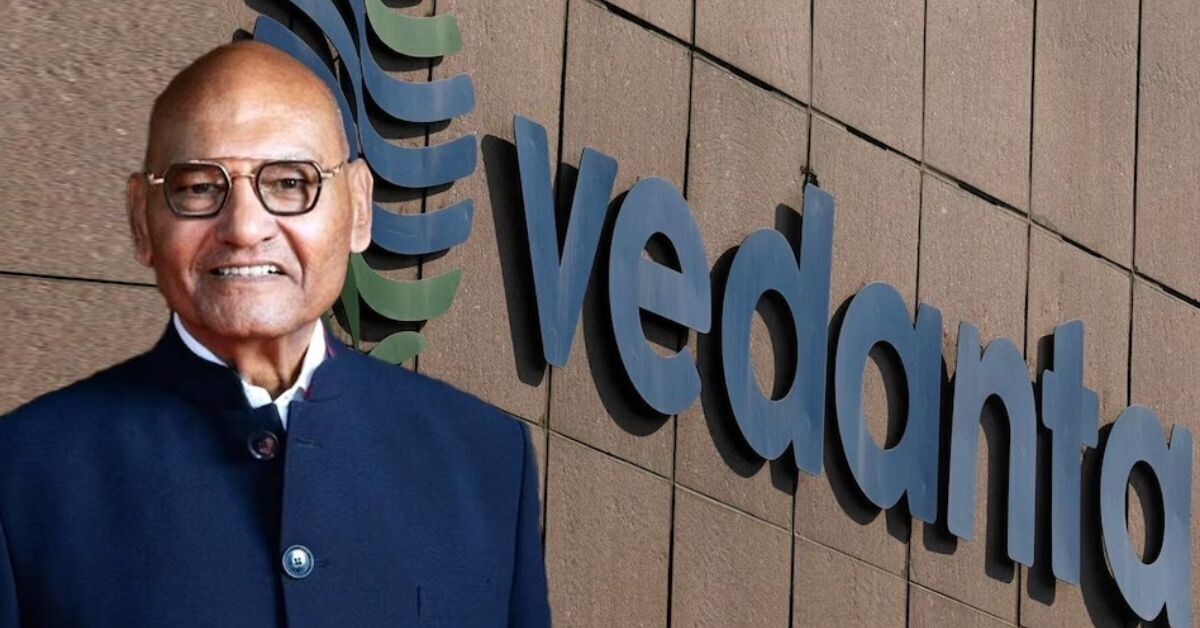
On 1 May 2026, Vedanta Limited will undergo a five‑way demerger into independently listed entities, marking one of the biggest corporate restructurings in Indian market history. For investors, this means Vedanta shares will be “split” into new listings across aluminium, power, oil & gas, iron & steel, and its core metals‑mining business, with a 1:1 ratio for each of four key demerged units.
What Is the Vedanta Demerger 2026?
Why Vedanta Is Splitting
Vedanta Limited has long operated as a conglomerate spanning aluminium, power, oil & gas, iron & steel, and base metals (zinc, lead, silver, etc.).
The 2026 demerger plan aims to:
- Unbundle distinct businesses into sector‑specific listed entities, each with its own capital structure and strategy.
- Improve transparency, governance, and valuation multiples for each vertical.
This restructuring was first announced in 2023, cleared by shareholders and NCLT in late 2025, and is now being implemented from 1 May 2026.
Which New Companies Will Vedanta Split Into?
According to Vedanta’s demerger scheme approved by the board on 20 April 2026, the company will split into five sector‑focused, independently listed entities.
Core Entities in the Demerger
| Entity | Business focus |
|---|---|
| Vedanta Limited (core metals‑mining) | Zinc, lead, silver, nickel, related mining and metals |
| Vedanta Aluminium Metal Limited (VAML) | Aluminium, metal trading, aluminium‑based verticals |
| Talwandi Sabo Power Limited (TSPL) | Power generation assets (coal‑based and renewables) |
| MALCO Energy Limited (MEL) | Oil & gas business (ONGC‑linked blocks, exploration) |
| Vedanta Iron and Steel Limited (VISL) | Iron‑ore and steel‑related assets |
After the demerger, existing Vedanta shareholders will automatically receive shares in these four new entities plus retain their stake in the core Vedanta metals business, all in 1:1 proportion per Vedanta share held.
Vedanta Demerger – Key Dates (2026)
Official Record Date and Effective Date
- Record date: 1 May 2026
- Effective date: 1 May 2026 (same day)
This means:
- You must hold Vedanta shares in your demat account at the end of 1 May 2026 to be eligible for the demerger consideration (shares in the new entities).
Because Indian markets follow a T+1 settlement cycle, the last day to buy Vedanta and still be eligible is 29 April 2026:
- Trades on 29 April 2026 settle on 30 April 2026, so your holding will be reflected in your demat by 1 May 2026.
Ex‑Demerger Trading Date
- Ex‑date: 30 April 2026
- On this date, Vedanta shares start trading ex‑demerger, i.e., without the entitlement to the new‑entity shares.
Market platforms like NSE, BSE, and brokers (Zerodha, Upstox, Paytm Money, Angel One, Kotak, etc.) have already notified customers that 30 April 2026 is the ex‑date for Vedanta demerger, with a Special Pre‑Opening Session (SPOS) for price discovery.
What Does the Demerger Ratio Mean?
Entitlement Ratio: 1:1 per New Entity
Vedanta’s filing and broker notes consistently state:
- Shareholders will receive one equity share in each of the four demerged entities (VAML, TSPL, MEL, VISL) for every one Vedanta share held on the record date.
So if you hold:
- 100 Vedanta shares on 1 May 2026, you will be allotted:
- 100 shares of VAML
- 100 shares of TSPL
- 100 shares of MEL
- 100 shares of VISL
In total, one pre‑demerger Vedanta share becomes five tradable securities after 1 May 2026.
How Vedanta Shares Are Trading Ex‑Demerger (30 April 2026)
Special Pre‑Opening Session (SPOS)
On 30 April 2026, the NSE and BSE are running a Special Pre‑Opening Session (SPOS) for price discovery linked to the ex‑demerger date.
- Timings (NSE):
- SPOS for Vedanta (Vedanta Special) trading symbol “VDEL”
- 9:15 AM – 9:45 AM (IST)
- After 9:45 AM, normal market trading resumes.
During this 15–30‑minute auction window, the market discovers the post‑demerger “fair value” of Vedanta under the new cap‑structure and flags any big imbalances in demand‑supply versus the implied prices of the new entities.
Trading Impact on 30 April 2026
- Vedanta shares will trade at a lower base price on 30 April because they no longer carry the right to receive four new additional shares.
- Brokers expect fresh all‑time‑high levels pre‑ex‑date (as seen in April 2026 rallies) as traders front‑run the demerger‑related demand.
Price‑discovery sessions help retail and institutional investors adjust their buy‑sell levels and avoid squeeze‑driven volatility.
Vedanta Demerger – 2026 Timeline Snapshot
| Milestone | Date (2026) | Status / Impact |
|---|---|---|
| Board approves implementation | 20 April 2026 | Final approval for 1 May 2026 record/effective date |
| Record date & effective date | 1 May 2026 | Shareholders entitled to 1:1 shares in 4 new entities |
| Last buy date (T+1) | 29 April 2026 | Buy on or before 29 April to be eligible |
| Ex‑date | 30 April 2026 | Vedanta trades ex‑demerger; SPOS for price discovery |
| Listing of new entities | Targeted 15 May 2026 | New companies VAML, TSPL, MEL, VISL to list on exchanges |
| Overall completion deadline | 30 June 2026 | Legal and procedural closure of demerger by this date |
Who Gets What? – Demerger Entitlement Details
Pre‑Demerger Structure
Before 1 May 2026, one Vedanta share represents ownership in the entire bundled business:
- Metals & mining (zinc, lead, silver, nickel)
- Aluminium
- Power
- Oil & gas
- Iron & steel
Post‑Demerger Structure (Illustration)
Assume investor X holds 100 Vedanta shares:
| Entity | Shares received |
|---|---|
| Core Vedanta (metals‑mining) | 100 (same share) |
| VAML (aluminium) | 100 |
| TSPL (power) | 100 |
| MEL (oil & gas) | 100 |
| VISL (iron & steel) | 100 |
So 100 pre‑demerger shares effectively split into five 100‑share buckets, each tracking a different business. This is what the 1:1 demerger ratio means in practice.
“What You Get” Per 1 Vedanta Share
| Business vertical | New entity | Entitlement (per 1 Vedanta share) |
|---|---|---|
| Aluminium | Vedanta Aluminium Metal Limited (VAML) | 1 share |
| Power | Talwandi Sabo Power Limited (TSPL) | 1 share |
| Oil & gas | MALCO Energy Limited (MEL) | 1 share |
| Iron & steel | Vedanta Iron and Steel Limited (VISL) | 1 share |
| Metals & mining (core) | Vedanta Limited | 1 share (continues in demat) |
This structure lets investors hold, sell, or rebuild exposure to each vertical independently after the split.
How to Check If You’re Eligible for the Demerger
Eligibility Rules (2026)
You are eligible if:
- Your Vedanta shares are in your demat account on the record date (1 May 2026).
- You did not sell before the T+1 cutoff (last buy day: 29 April 2026).
If you:
- Sell Vedanta on 30 April 2026, you still retain the demerger entitlement because the record date is after that.
- Buy Vedanta on 1 May 2026 or after, you do not get the 1:1 right in the new entities.
No action is required from shareholders; the demat and depository (CDSL, NSDL) and stock exchanges will automatically credit the new‑entity shares to your account once the scheme is completed.
Eligibility Scenarios (Vedanta Demerger 2026)
| Action / Date | Demerger entitlement status |
|---|---|
| Bought Vedanta on 28 April 2026 | Eligible (settlement on 29 April; holding visible on 1 May) |
| Bought Vedanta on 29 April 2026 | Eligible (settlement on 30 April; holding visible on 1 May) |
| Bought Vedanta on 30 April 2026 | Not eligible to 1:1 in new entities |
| Bought Vedanta on 1 May 2026 | Not eligible to 1:1 in new entities |
| Sold Vedanta on 29 April 2026 | Not eligible (no shares in demat on 1 May) |
| Sold Vedanta on 30 April 2026 | Eligible (shares still in demat on 1 May) |
What Happens on and After 1 May 2026?
Share Allotment and Crediting
- Within a few days after 1 May 2026, the new‑entity shares (VAML, TSPL, MEL, VISL) will be credited to your demat account in the 1:1 entitlement.
- Core Vedanta shares (metals‑mining) remain in your account under the same ISIN; no new ISIN for this portion.
You can then:
- Hold all five
- Sell some (e.g., only aluminium, only power, etc.)
- Or rebalance your portfolio across the different sector‑specific companies.
Listing and Normal Trading Start
- The target listing window for the new four entities is around 15 May 2026.
- Before listing, your demat will show the shares as “pre‑listed” or “in gestation”, and trading will start once exchanges open sessions for VAML, TSPL, MEL, and VISL.
Brokers and financial educators are running Vedanta demerger‑specific webinars and write‑ups so you understand price‑discovery logic and potential vol‑window around these new listings.
Post‑Demerger Phase Snapshot (2026 Outlook)
| Phase | Timeframe (approx.) | Key activity |
|---|---|---|
| Pre‑ex‑date | Before 30 April 2026 | Traders buying Vedanta for demerger entitlement |
| Ex‑date + SPOS | 30 April 2026 | Vedanta trades ex‑demerger; SPOS for price discovery |
| Record / effective date | 1 May 2026 | Eligibility freezing; scheme formally effective |
| Allotment & pre‑listing | Early–mid May 2026 | Shares in 4 new entities credited to demat |
| New listings | Target 15 May 2026 | VAML, TSPL, MEL, VISL start trading on NSE/BSE |
| Completion deadline | 30 June 2026 | Full legal and procedural closure of demerger |
Why the Vedanta Demerger Matters for Investors
1. Sector‑Specific Valuation
Each new entity:
- Bets on one sector (aluminium, power, oil & gas, iron & steel, metals & mining), making it easier to compare with pure‑play peers.
- Potential for higher valuation multiples if the market rewards focused, transparent structures over conglomerates.
2. Portfolio Diversification Within One Holding
- One pre‑demerger Vedanta share becomes five distinct, sector‑focused shares, giving you built‑in diversification without trading.
- After listings, you can tilt your exposure (e.g., overweight aluminium but underweight oil & gas) based on your view.
3. Trading and Arbitrage Opportunities
- The SPOS on 30 April 2026 and initial listings in May 2026 may create **arbitrage —windows between:
- Vedanta’s post‑demerger price and
- The implied aggregate value of the four new entities plus core Vedanta
- such opportunities attract institutional and algorithmic traders, which can temporarily spike volatility.
4. Governance and Reporting Clarity
- Separate boards, disclosures, and strategies per entity may improve ESG, climate‑risk, and capital‑allocation transparency—especially in aluminium, power, and oil & gas, where ESG scrutiny is high.
- Investors can now hold or exit each vertical independently, rather than being “forced” into a conglomerate bundle.
Common Misconceptions Around Vedanta Demerger
Many investors ask:
- “Does my holding value increase automatically?”
No. Demerger is not a bonus issue; it’s a restructuring. The same economic value is split into more securities. - “Will Vedanta shares drop after demerger?”
Vedanta will trade at a lower per‑share price because each share now represents only the core metals‑mining business, not the full bundle. However, total portfolio value depends on how the market prices all five entities. - “Do I need to pay extra for the new shares?”
No. The 1:1 entitlement is free of cost to existing shareholders; it’s a capital‑restructuring right, not a subscription.
How to Plan Your Trades Around 30 April 2026 (Ex‑Date)
If you’re inclined to trade around the ex‑date, consider these points:
1. For Those Who Want Demerger Entitlement
- Buy Vedanta on or before 29 April 2026 so your purchase settles on 30 April and you’re in the demat on 1 May.
- Do not sell on 30 April if you want to retain the 1:1 right; selling on 30 April keeps you eligible.
2. For Those Who Don’t Want the New Entities
- Sell Vedanta on 29 April or earlier to avoid automatically getting four new bonus‑style shares.
- Remember: if you buy on 1 May 2026 just to scalp, you do not get the 1:1 entitlement.
3. For Existing Long‑Term Holders
- If you already hold Vedanta and plan to hold for fundamentals, the demerger mainly:
- Unbundled the exposure (no extra profit),
- Introduced new trading symbols (VAML, TSPL, MEL, VISL).
You can either hold all five or sell some post‑listing based on your sector‑view.
Regulatory and Tax Implications (High Level)
1. Regulatory Approach
- The demerger has been approved by NCLT and shareholders, and is being executed as a Slump‑Sale‑style scheme under the Companies Act and SEBI guidelines.
- Exchanges have issued circulars detailing symbol changes, ISINs, and SPOS rules for 30 April 2026.
2. Tax Perspective (Conceptual)
- In India, demerger‑type events are often treated as non‑taxable re‑organization for shareholders, but the cost base is allocated across the resulting entities.
- Exact tax‑cost allocation depends on your purchase price, dates, and advisory, so it’s wise to:
- Consult a chartered accountant or tax advisor
- Or use wealth‑tax planning tools integrated in modern brokers or mutual‑fund platforms
FAQs – Vedanta Demerger 2026 (Record Date, Ratio, Ex‑Trading)
1. What is the Vedanta demerger record date?
The record date is 1 May 2026. If you hold Vedanta in your demat at the end of that day, you’re entitled to 1:1 shares in four new entities (VAML, TSPL, MEL, VISL).
2. What is the demerger ratio?
The ratio is 1:1 for each of the four demerged entities per Vedanta share held. So every 1 Vedanta share becomes 1 share in each of VAML, TSPL, MEL, and VISL, plus 1 share in the core Vedanta metals‑mining entity.
3. Which company is Vedanta demerging with?
Vedanta is not merging with another company; it’s splitting internally into five independent listed entities (one core Vedanta plus four new ones). So it’s a pure demerger/unbundling, not an in‑bound merger.
4. When is the ex‑date for Vedanta demerger?
The ex‑date is 30 April 2026. On this day, Vedanta shares trade without the 1:1 entitlement to the new‑entity shares.
5. How is ex‑trading being handled on 30 April 2026?
NSE is running a Special Pre‑Opening Session (SPOS) for Vedanta (symbol “VDEL”) from 9:15–9:45 AM IST for price discovery, after which normal trading resumes. This helps prevent disorderly price gaps.
6. When will the new entities list?
The target listing window is around 15 May 2026 for VAML, TSPL, MEL, and VISL on NSE/BSE; exact dates depend on exchange clearances and documentation.
7. Do I need to do anything as a shareholder?
In practice, no action is required. The demat and depository will automatically credit the new‑entity shares once the scheme is complete. Just keep Vedanta in your demat till the record date if you want the 1:1 entitlement.
Final Thoughts – What Vedanta Demerger Means for You (2026)
The Vedanta demerger effective 1 May 2026 is a landmark restructuring that transforms a conglomerate into five sector‑focused listed entities. For investors, the key practical takeaways are:
- Record date: 1 May 2026 → Hold Vedanta in demat at EOD to be eligible.
- Demerger ratio: 1:1 per new entity (VAML, TSPL, MEL, VISL) → 1 Vedanta share → 5 securities.
- Ex‑date: 30 April 2026 → Vedanta starts trading ex‑demerger with a Special Pre‑Opening Session (SPOS) for price discovery.
Whether you’re a long‑term fundamental investor, trader, or just a cautious holder, understanding these dates, ratios, and ex‑trading rules helps you navigate the demerger smoothly and avoid missing out on the 1:1 entitlement or getting caught in price‑discovery volatility.
- Follow us – Facebook , Instagram
- Related Articles You May Like:
- Agra to Faridabad Cab, Agra to Greater Noida, Agra Taxi Service, Agra to Noida Cab Service, Agra to Gurgaon Cab, 5 Star Hotels in Agra Near Taj Mahal, Mathura Vrindavan Tour from Agra, Banke Bihari Temple Timings